
Title: Mastering Cryptocurrency Trading with Advanced Indicators and Tools
Introduction
The world of cryptocurrency has experienced exponential growth in recent years, with prices skyrocketing and plummeting at the whim of market sentiment. As a trader, navigating this uncharted territory can be daunting, but with the right tools and indicators, you can gain a deeper understanding of market trends and make informed trading decisions. In this article, we’ll delve into the world of cryptocurrency trading, exploring the role of advanced indicators and trading tools in shaping market outcomes.
What are Trading Indicators?
Trading indicators are mathematical formulas or algorithms used to analyze market data and predict future price movements. These tools help traders identify patterns, trends, and potential breakouts or reversals, which can inform their buying or selling decisions. Traders use a combination of technical and fundamental analysis to evaluate the likelihood of success for each trade.
Types of Trading Indicators
There are several types of trading indicators used in cryptocurrency markets:
- Moving Averages (MAs): MAs smooth out price movements, providing a longer-term perspective on market trends.
- Relative Strength Index (RSI)
: RSI measures the magnitude of recent price changes to identify overbought or oversold conditions.
- Bollinger Bands: Bollinger Bands display volatility and provide support and resistance levels for price movement.
- MACD (Moving Average Convergence Divergence)
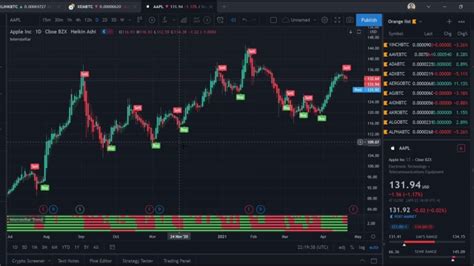
: MACD calculates the difference between two moving averages, helping traders identify trend reversals and breakouts.
Trading Tools
In addition to indicators, traders use various trading tools to enhance their analysis:
- Charting Software: Charting software like TradingView, Thinkorswim, or MetaTrader provides real-time data visualization and alerts for significant market events.
- Cryptocurrency Exchanges: Exchanges offer a platform for buying, selling, and managing cryptocurrency assets.
- APIs (Application Programming Interfaces): APIs enable developers to integrate trading tools into their platforms, expanding access to advanced analytics and algorithms.
Advanced Trading Indicators
Some popular advanced indicators used in cryptocurrency markets include:
- Ichimoku Cloud: A comprehensive analysis system that combines multiple lines and indicators for a holistic view of market trends.
- SMA (Simple Moving Average) with Exponential Smoothing (EMS): Combines traditional MAs with EMS to enhance trend identification and smoothing.
- RSI-EMA Crossover: Combines the Relative Strength Index with the EMA crossover to identify potential breakouts.
Real-World Applications
Advanced trading indicators and tools have been successfully applied in various cryptocurrency markets:
- Long-term Trend Following: Using indicators like MACD, Bollinger Bands, and Ichimoku Cloud to predict market direction for long-term trades.
- Short-Term Scoring: Applying simple moving averages or RSI-EMA Crossover to score market conditions for short-term trades (e.g., trading after a specific indicator signal).
- Risk Management: Using indicators like the RSI-EMA Crossover to identify potential risk levels and adjust positions accordingly.
Conclusion
Cryptocurrency trading requires a combination of technical analysis, fundamental knowledge, and advanced tools and indicators. By mastering these concepts, traders can increase their chances of success in this rapidly evolving market. Whether you’re a seasoned trader or just starting out, incorporating advanced indicators and trading tools into your strategy will help you navigate the complexities of cryptocurrency markets with greater confidence.