Layer 1 vs. Layer 2 Solutions: What is the right for your cryptocurrency needs?
The cryptocurrency world has become increasingly complex, with a multitude of solutions available to support different user usage cases and experiences. Two popular solutions of solutions are Layer 1 (blockchain) and layer 2 (Sidechain) platforms. In this article, we will deepen the differences between these two types of solutions and help determine what is right for your cryptocurrency needs.
What is a blockchain?
A blockchain is a distributed and decentralized accounting technology that records transactions on a computer network. It is the underlying infrastructure behind most cryptocurrencies such as Bitcoin and Ethereum. Blockchain is maintained by a point -to -point network, where nodes check and record transactions, creating a permanent and tamper proof record.
What are layer 1 solutions?
Layer 1 solutions are built on blockchain technology and offer a decentralized platform and without permission to store, validate and transfer cryptocurrencies. They provide the same level of safety, transparency and immutability of traditional cryptocurrencies. Examples of layer solutions 1 include:
- Bitcoin (BTC)
- Ethereum (ETH)
- Litecoin (LTC)
- Monero (XMR)
Layer 1 solutions are mainly designed for decentralized applications (Dapps) that require high transfer rate, low rates and fast transaction processing times.
What are Sidechain solutions?
Sidechain solutions are smaller and specialized platforms built on blockchain technology to allow faster, cheap and more efficient transactions. They usually trust existing public blockchains or create their own sidecchains from scratch. Examples of Sidechain solutions include:
- Ethereum (ETH) for the construction of decentralized finance applications (Defi)
- Cardano (ADA) to create a scalable and high performance blockchain platform
- POLKADOT (DOT) to allow interoperability between different blockchains
Sidechain solutions are often used to resolve specific use cases or improve existing blockchain performance in blockchain networks.
Main differentiated
When choosing between layer 1 and layer 2 solutions, consider the following important differences:
Security
* Layer 1 : Provides the highest level of safety, thanks to its decentralized architecture and cryptographic mechanisms.
* Layer 2
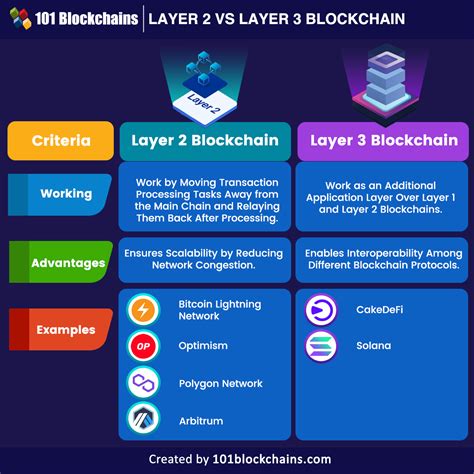
: Provides improved security through Sidechain -based solutions, which can reduce the risk of certain attacks or vulnerabilities.
Scalability
* Layer 1 : Can be limited by block time, transaction rates and scalability of the underlying blockchain network.
* Layer 2 : Allows faster transactions and higher transfer rate due to optimized data storage and processing mechanisms.
Tariffs
* Layer 1 : Usually more expensive than layer 2 solutions, especially for high volume transactions.
* Layer 2 : Often, cheaper or even free, depending on the specific use and implementation case.
Interoperability ###
* Layer 1 : It may require significant infrastructure and development efforts to achieve interoperability in different blockchain networks.
* Layer 2 : Allows the perfect interaction between different blockchains through side solutions, reducing integration costs.
Which solution is suitable for you?
When deciding between layer 1 and layer 2 solutions, consider the following factors:
* Use Case : If you are creating a decentralized application (DAPP) that requires high performance and low rates, a layer 1 solution may be more suitable. For defi applications or other use cases where scalability is critical, a side solution may be more effective.
* Network congestion : If your network is suffering from high congestion, consider using a layer 2 platform to optimize transactions and reduce latency.